Dr T.E. Forster:
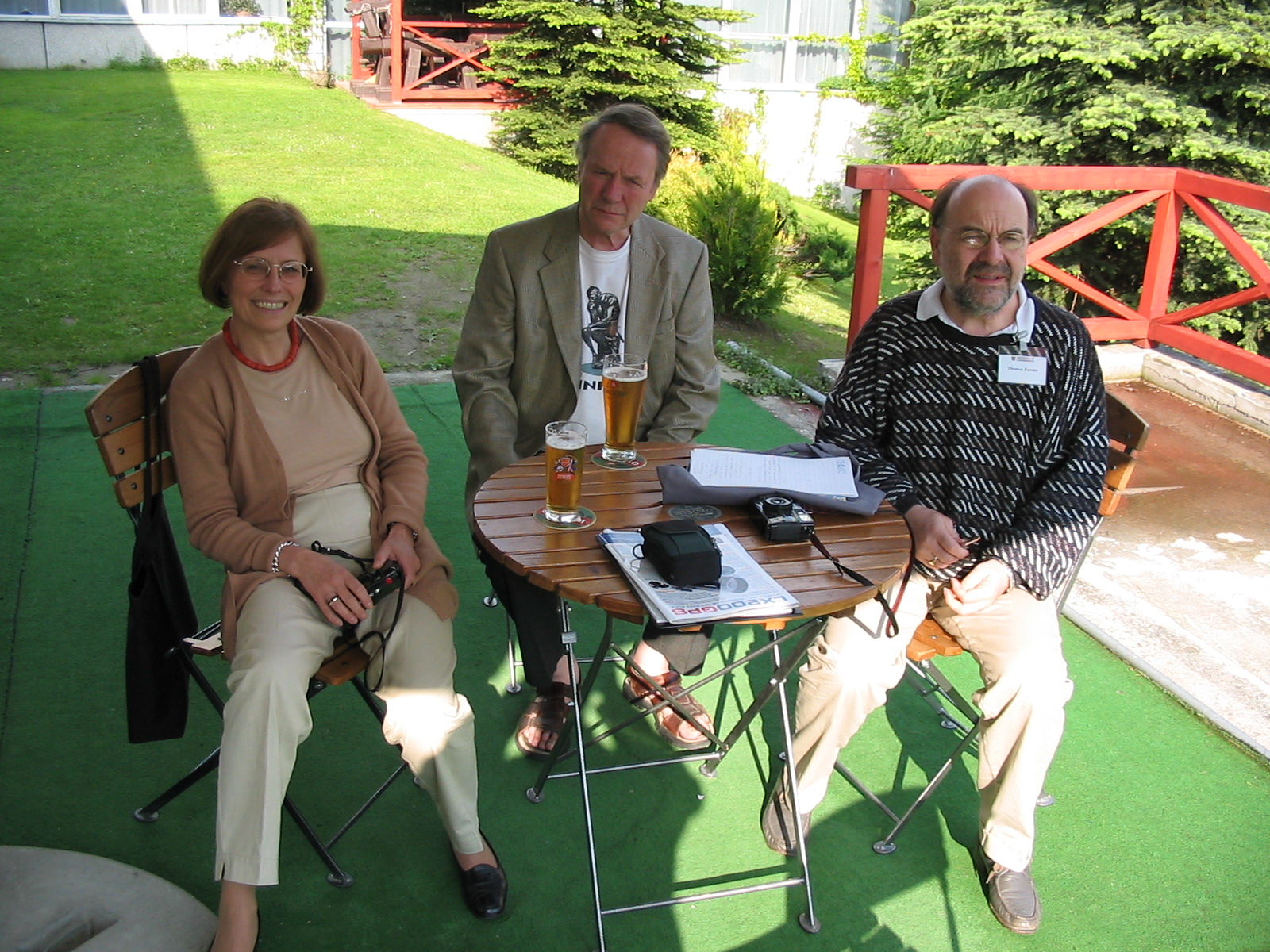
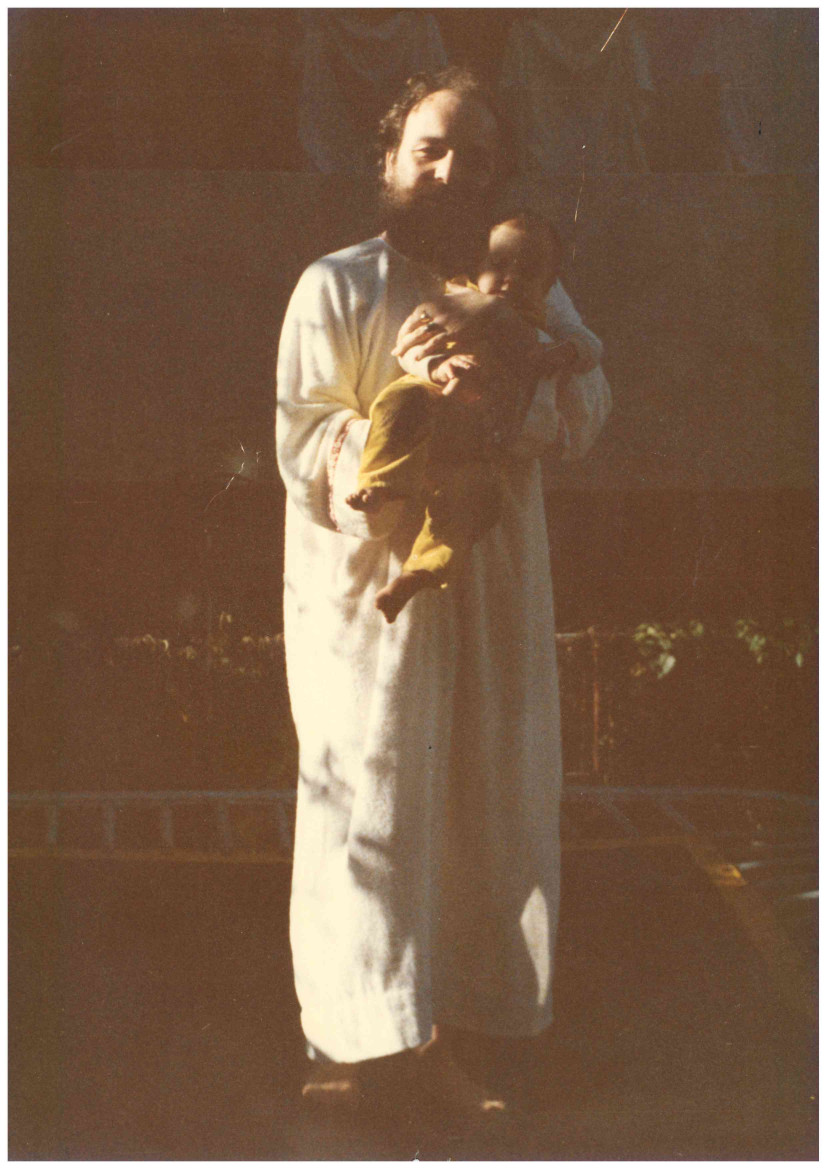
That's what I really look like, on the right.
Here
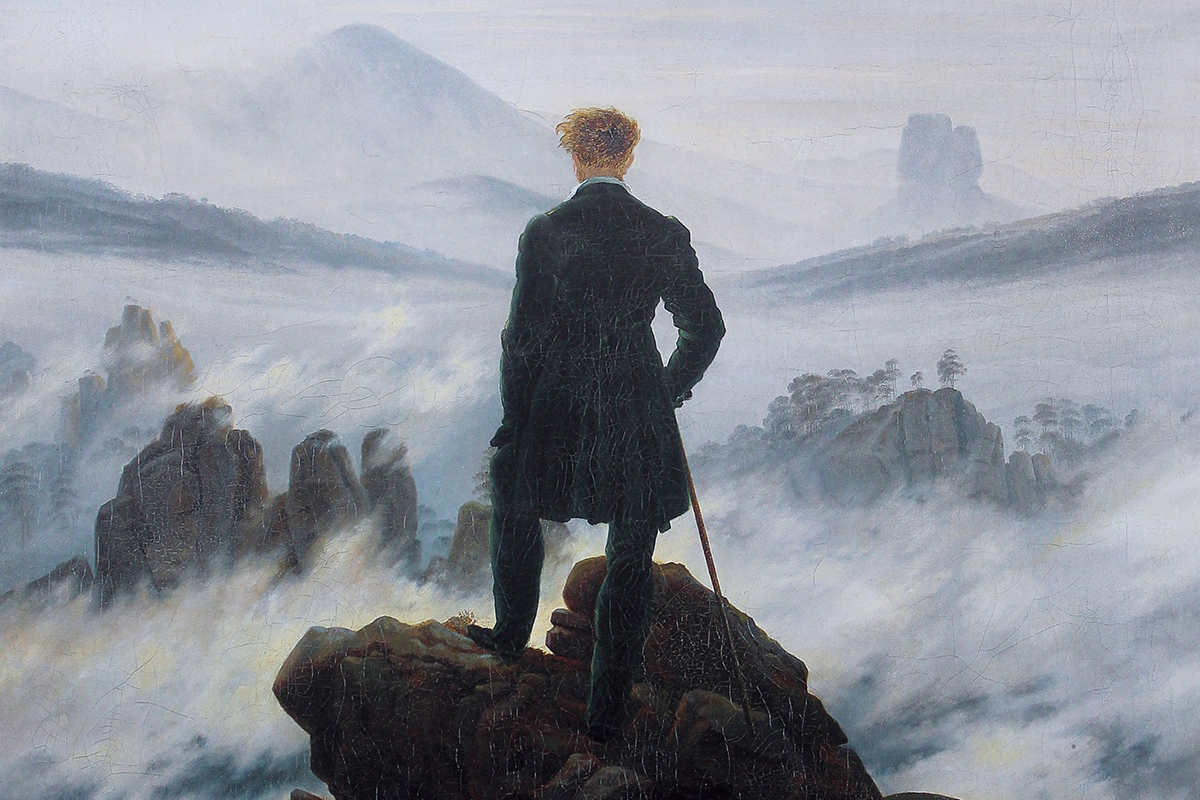
is the portrait of me that I keep in the attic.
For 21/22 I returned — with great reluctance — from my COVID-proof nuclear bunker in a secret location in New Zealand famous for its
dinosaur coprolites .
Email: tf@dpmms.cam.ac.uk
For Google's benefit I record here that my name is often misspelled `Thomas Foster' and `Thomas Forester'.
Click here for Appreciation of the Week.
Click here for Poem of the Week.
Click here for Bon Mot of the Week.
Click here for Chick of the Week.
Click here for Underage chick of the Week.
Affiliations:
Nowadays I am a visiting professor at Mathematics at the
Victoria university of Wellington.
From october 2016 to september 2022 I was the resident bye-fellow in Pure
Mathematics in Queens',
College Cambridge (where I was also Director of Studies for Part III and am now an Emeritus Fellow—tho' i haven't yet worked out what that involves);
now that I have reached retirement age my status as an affiliated
lecturer in the department of Pure Mathematics and Mathematical
Statistics in Cambridge has lapsed; I am a Life Associate of Clare Hall, Cambridge, and I
am also a Senior member of St. Edmunds,.
Outside
Cambridge my affiliations are: Adjunct Senior Fellow in the Philosophy
department at the University of Canterbury at
Christchurch; Visiting Lecturer at Queen Mary Westfield ; External
Researcher of the
Auckland Centre for Discrete Mathematics and Theoretical Computer
Science in New Zealand, and a
Fellow of the Center for
Philosophy of Science at the University of Pittsburgh.
When I was
in residence there I stayed—as many fellows do—in Carl
Hempel's flat. The Pittsburgh Center [sic] also has conferences. (Pittsburgh has many attractions
beyond its six (!) universities: serious weather, a wonderful
orchestra, opera houses, rivers, cable cars, the best chips in America
(at the
Original Hot Dog. Be sure to ask for a small portion),
steel mills, lots of history (much of it sad), and, last
but not least, an airport called—wait for it—``Tom
Foerster International Airport''! (The correct explanation for this
spelling mistake is surely the one found by Sten Vikner who pointed out
that they must have misplaced my middle initial.)
Chores:
I organised the 70th anniversary NF meeting (``NFUK'') in Cambridge at the end of May 2007.
I am on the Comité de Redaction of the Belgian Centre National de
Recherches de Logique;
I am a ``correspondent étranger" of
Logique et Analyse;
I was the Cambridge horn (in fact the Principal Researcher(!)) of
the (currently slumbering) three-horned beast that is Cameleon.
I was Conference
Director for the (now dormant) St Luke's Institute, in which
capacity I organised BILAP (Buddhism in
Logic and Analytic Philosophy) which held its inaugural meeting in
Cambridge in November 2005, and the Logic and
Rhetoric conference held in Cambridge on the last weekend of
October 2006.
I was on the DPMMS Quiz team
which mercilessly crushed all opposition to be the winners in the
800th anniversary Quiz contest. At the 800th anniversary garden
party we went on to murder a team of alumni. I used to have a link
to footage of that event, but that footage was never for the
squeamish and has now been made unavailable!
Movements:
I spent summer 2014 flying the flag in
the Idaho Marches in
urgent consultations with the world expert on the consistency of
NF. (I know that information is not current, but i do so like the
picture).
Research:
I am a logician: i study Logic .
I work on Set Theory, Type Theory, BQO theory, Philosophy of Mathematics and Philosophy of Mind. I developed
this last interest when I was a music+philosophy student and it led me
into
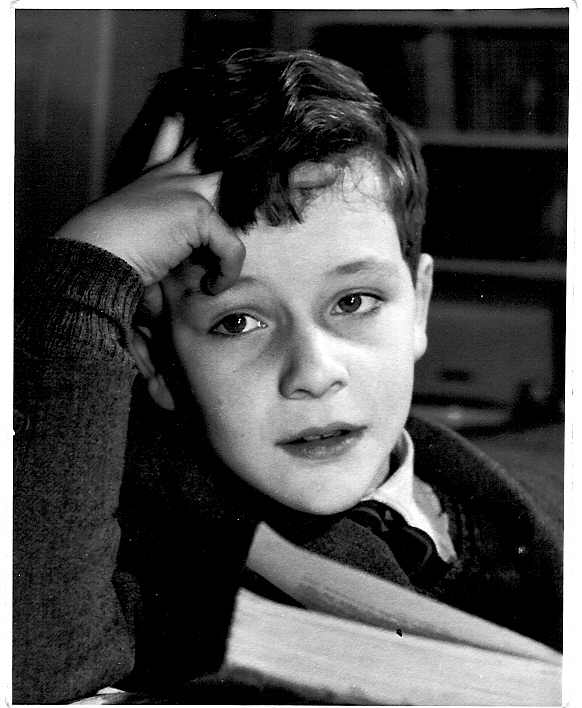
Neurophysiology (yes, that is me in the picture, but no logicians were harmed in the execution of this experiment)
: until relatively recently I was a paid-up member of the Electro-Physiological
Technologists Association. I had to give up
my part-time post at Addenbrooke's doing EEGs to take up my Pittsburgh
Fellowship. The
combination of an interest in Philosophy of Mind and a training in
logic has given me an abiding interest in the logic of virtual
(theoretical) entities. (Having the part of the Cheshire Cat in the
school production of Alice about the time the above photograph was
taken probably played a part too). Indeed when the Logic and
Philosophy of Science department at the University of California at
Irvine were so kind as to invite me to spend three months with
them I took the opportunity to write a book about it, called Reasoning about Theoretical Entities. Not
surprisingly, given my exposure to the Life Sciences and my interest
in reasoning about theoretical entities, I have an interest in
Philosophy of Biology. Most of my publications concern Quine's set theory NF,
for which an introduction for a general audience can be found here (it was a 60th anniversary retrospective article
for the American Mathematical Monthly).
Visitors
May-june 2015—and again in 2018—I hosted Randall Holmes in Cambridge, Holmes continuing his vain attempt to get the consistency of NF into my thick skull. (He tried again in
2019—with a larger hammer—but to no avail).
In Michaelmas 2015/6 and again in 2018 I hosted Alice Vidrine.
In recent years I have
had Olivier Esser
in Cambridge as my post-doc, working on NF.
Thierry Libert has been here for two visits, continuing his
project to teach me some positive set theory (GPC etc: this isn't
Set-Theory-by-Compte, despite the adjective and the French
Connection). I had two visits from Edoardo Rivello, who
wants to learn about symmetric models for
stratified fragments of ZF. In Michaelmas 2019 I had the treat of an LMS-funded visit from
Albert Visser .
Teaching
Cambridge
teaching materials (for my Cambridge students and readable only
from .cam.ac.uk addresses);
You might find my essay on Julian Jaynes'
The Origin of Consciousness in the Breakdown of the Bicameral Mind a useful resource.
If you are a Cambridge physiology student thinking of doing my Part II
project have a look at the proposal. I don't
think I can support it now (I am no longer at Addenbrooke's) but I think
the department there would still be interested.
A Ph.D., perhaps?
The world of NF studies is being turned upside-down by the rumours
that NF has been proved consistent. Unfortunately I am no longer allowed
to supervise Ph.D. students in Cambridge, and i don't know whether my visitor status at Wellington will allow me to supervise Ph.D. students there, but I haven't asked. In addition to the
obvious NZ delights we all know about (hobbits behind every sofa etc etc)
there is also the point that NZ fees for Ph.D. students are a lot
lower than Cambridge fees!
For while i was trying to interest people in the constructions discussed
in my AMS Baltimore meeting article.
Dang Vu
wrote a Ph.D. thesis on this subject
which he has kindly allowed me to link from here.. My hope was that these
constructions would lead to a proof of Con(NF). Even if it is true that
they have been pipped at the post, the methods used in this paper are
related to those used in the alleged proof, and it could be a good place
to start reading.
I am interested in taking on some more Ph.D. students to work on NF and
to this end I provide a discussion of some suitable
thesis topics. Actually not all the topics in there are NF topics...
there are some topics in philosophy of mathematics that i'd be happy to
supervise too.
There is a plan to get some money together for a Ph.D. studentship to do
a formal verification of Holmes' proof of Con(NF). It's only at the design
stage as yet, but if you are suitably qualified it would do you no harm to tell me
about yourself.
Ancestry
My mother came from Basel, the city that Holbein made his home, that produced
Leonhard Euler, and has been home to the Bernoulli family
since they were expelled by the Reyes Catolicos (isn't that enough for
a small town???). We know about the mathematicians of course, (and
even the tennis players: Roger Federer is a Basler) but it has also
produced some wonderful painters—and not just Holbein. Sadly the
creator of this little gem in the
Eulerstrasse (yes, it's the same Euler) did not sign his work and his
(her?) identity was not recorded for posterity. I tell everyone I am
a fourth-generation academic, and this is because of her (my mother's)
grandfather
Otto Billeter Snr who was a fairly well-known chemist (he discovered the
rearrangement of allyl thiocyanate to allyl isothiocyanate)
from whom i inherited through her not only some genes for doing
chemistry but also a dressing-gown.
Hans Frauenfelder is his great-nephew.
Jean-Pierre Vouga is his grandson.
My father, too, is in Wikipædia (as are his father and grandfather) but the pick of the Wikipædia entries on my ancestors is probably
John Freke. Sadly
I get only about 0.4% of my genes from him—which is a pity, 'cos he was an FRS!
But in any case it's intellectual ancestry one worries about.
I had two DoktorVater: Adrian Mathias in Cambridge, and
Maurice Boffa
in Brussels. Sadly, Boffa died in 2001: it is a terrible loss.
Here are two group pictures, with three of his
Ph.D. students.
My
other DoktorVater,
Adrian Mathias, is still very much alive—for the moment at
least: he does live uncomfortably near an active volcano!)
According to the
Mathematics Genealogy Project I am descended (thru' Mathias)
from Fichte, Hegel, Kant and Leibniz!! Thru' Boffa I am descended from Poincaré!!
Like
Everyone Who Is Anyone in Silicon Fen I worked (briefly) for
Clive Sinclair, in my case in
the
Sinclair Radionics days. (He was a neighbour of my parents). My Erdős
number is 3: Forster-Truss-Shelah-Erdős ; (and Erdős many years
ago described me as ``a very strange young man''!). But there are
other metrics. My Trotsky number is 3 (I shared an office with a colleague
(Giovanna Corsi) who shared an office with a colleague
(Jean van Heijenoort) who was Trotsky's bodyguard); my Beethoven
number is 4, since I have shaken hands with a man who shook hands with
a man who shook hands with Grillparzer, who shook hands with
Beethoven, Liszt...well—everyone! I once played Garcia Lorca's
piano. I used to play chess with a woman who had been Tolstoy's
next-door neighbour, and had been taught by Alekhine
. When an infant
she had been dandled on Tchaikovsky's knee. Facebook is forever telling me i should
(``friend suggestion'') befriend Jacinda Ardern. (We have a facebook friend in common). If you are a Canadian you
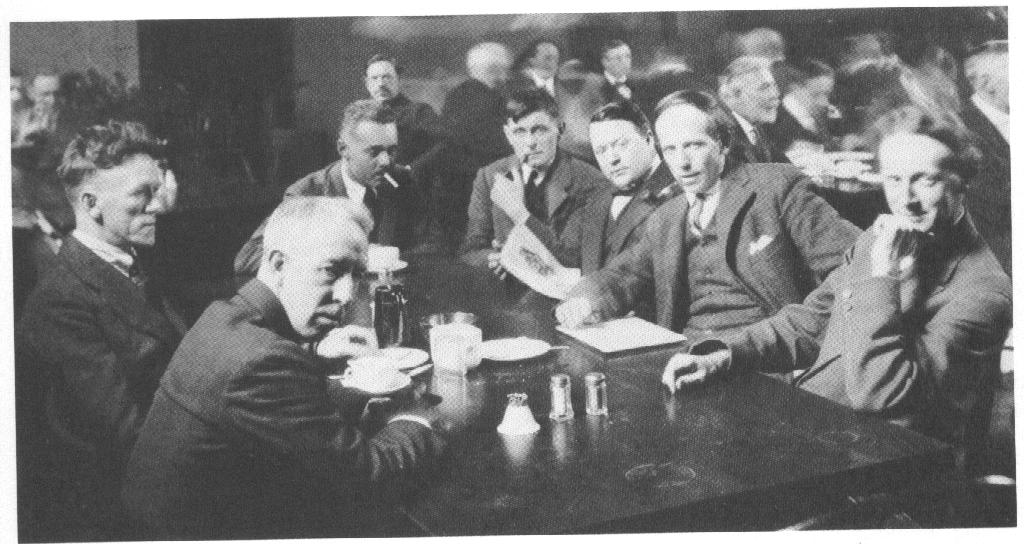
may be impressed by the fact that I once had my portrait painted by Barker Fairley (he's the one with the pipe in
this group picture of the group of seven); apparently I am the only
person other than Wittgenstein to have given a course of lectures in
Cambridge gazetted under the title `Philosophy' (that is a distinction that Wittgenstein can hardly have forseen); my Ph.D. Thesis
title "N.F."
is the shortest on record; as far as I know I am the only
person to have a Cambridge Ph.D. in mathematics without having done
any undergraduate mathematics; finally I must surely be the only Logic
Ph.D. anywhere in the world who is also licenced to drive an EEG machine.
[tho' this is less remarkable than the double coup by my Otago colleague
Grant Gillett who had two articles accepted in the one year...one for MIND and the other for BRAIN.] My remaining distinguishing features are of less
interest. Born in the oldest house in Cambridge? And a haunted one at
that? (It's the
Abbey House). It
had been a gift from the first Baron Fairhaven to the Cambridge City Council who then
divided it into flats and let them out—so should I ever want to go
into politics I can always say I was born in council house! and I was
delivered by Alice
Roughton). The only person to have been at school with both the
erstwhile Home Secretary (Charles Clarke) and the Queen's (erstwhile)
private secretary (Robin Janvrin)? (Not to mention the—sadly—thoroughly unmemorable
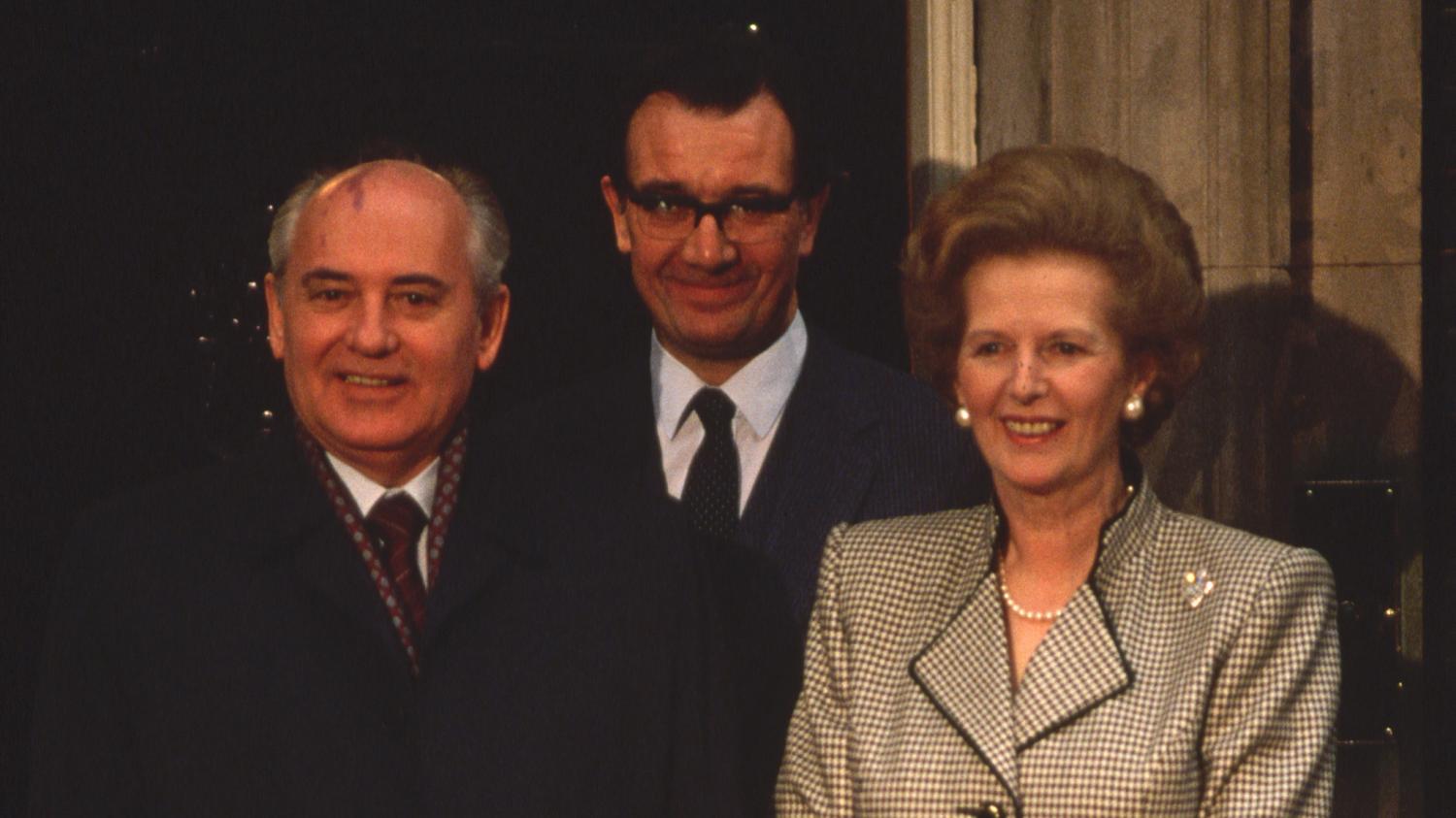
Nick Drake who was in my Russian class at Marlborough. We were taught by the entirely stellar Richard Pollock, who went on to be Mrs Thatcher's personal interpreter in her conversations with Gorbachev). The
tabloids are not beating a path to my door. I do not—yet—have a
theorem named after me, (nor even an
airport, see above) tho' there is a lifeform bearing my name: not a
child—sadly—but a midge
called Telnatogeton Forsteri. This
lives only in New Zealand—there is a type specimen in my desk drawer in
Cambridge but it's definitely dead. This lifeform was discovered by my
friend John Leader. If you wish to name an invertebrate or a theorem—or even an airport—after me, feel free.
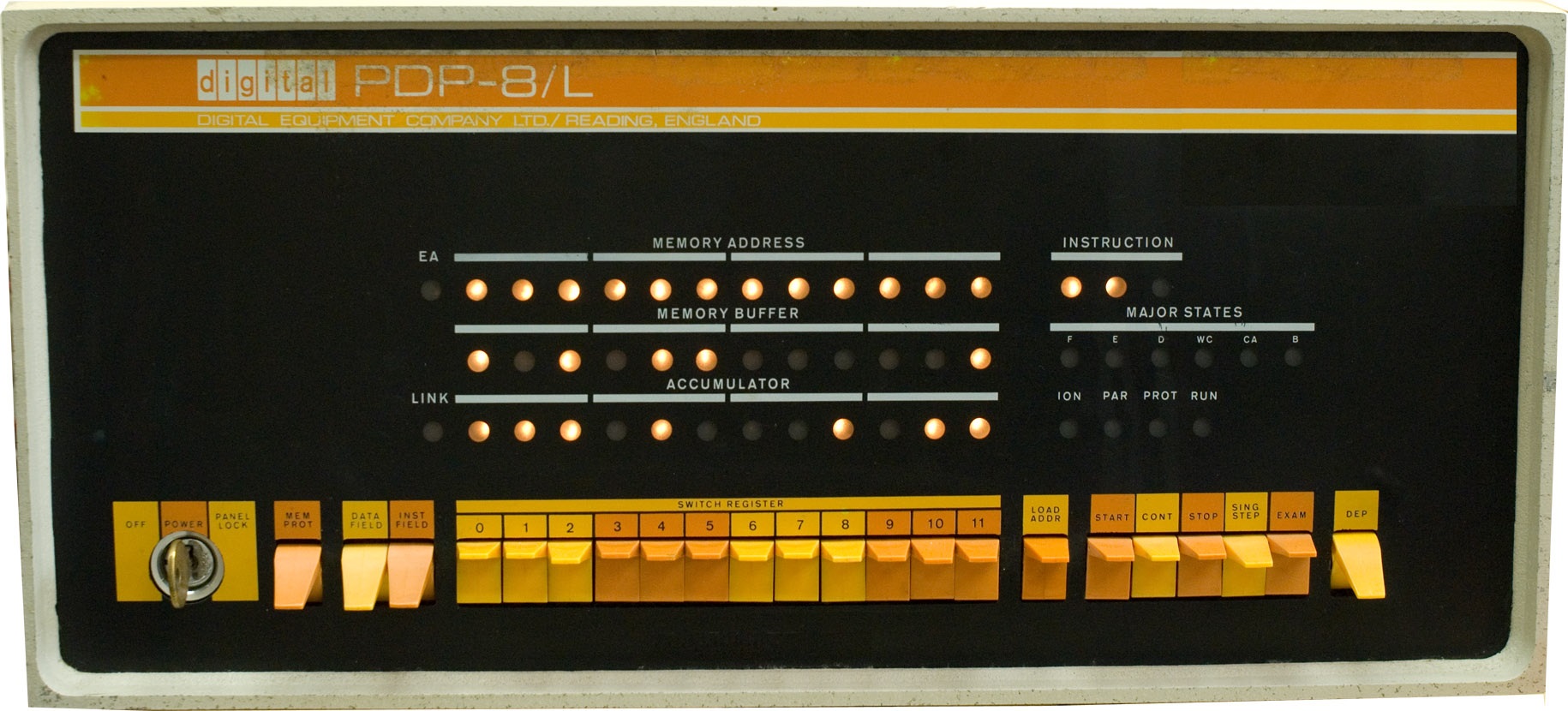
Here, for old times' sake, is the console of the first machine i ever wrote code for. My former student Nick Benton says that assembly language is the sound of old men crying into their beer, but i'm not ashamed.
NF Materials:
The stuff in this section is all unpublished; for published items scroll down a wee bit.
I make available here the pdf of my Commonplace book on NF.
Cartesian-closedness fails in
NF does what it says on the tin.
This essay on Realizability and the Possibility of a Consistency
Proof for the Constructive Fragment of Quine’s
Set Theory NF was accepted for the July 2019 Paris meeting on Facets of Realizability but i was prevented from presenting it by some surgery.
Scansets shows how to use a cute new datatype to interpret various versions of Mac Lane set theory into (various versions of) KF.
A strongly cantorian union of strongly cantorian sets is a discussion of the eponymous proposition.
Stratification mod n generalises (weakens) stratification in various systematic ways and proves a special case of the duality conjecture.
Two remarks on extracted models answers two questions i was asked in Wellington the other day about the extracted model construction for TZT.
More on Church-Oswald Models is my latest thinking on this amusing topic. Lots of nice stuff. My department has the matter constantly under review.
As part of the project to make historical NF literature freely available I am posting here my Ph.D. Thesis .
Other Unpublished Material:
I supply here other material of publishable standard and interest that i can't be arsed sending off.
Supervaluationism makes a connection between supervaluationism, constructive logic and lazy evaluation.
henkin.pdf is a log of my attempt to master Henkin's two 1950's JSL papers on generalisations of the ideas of ω-consistency and ω-completeness. Readers with similar ambitions to mine may find it useful.
ramsey.pdf is, similarly, a log of my attempt to master the paper by Ramsey. We all know it's there of course, but nobody ever reads it, which is a shame.
Publications:
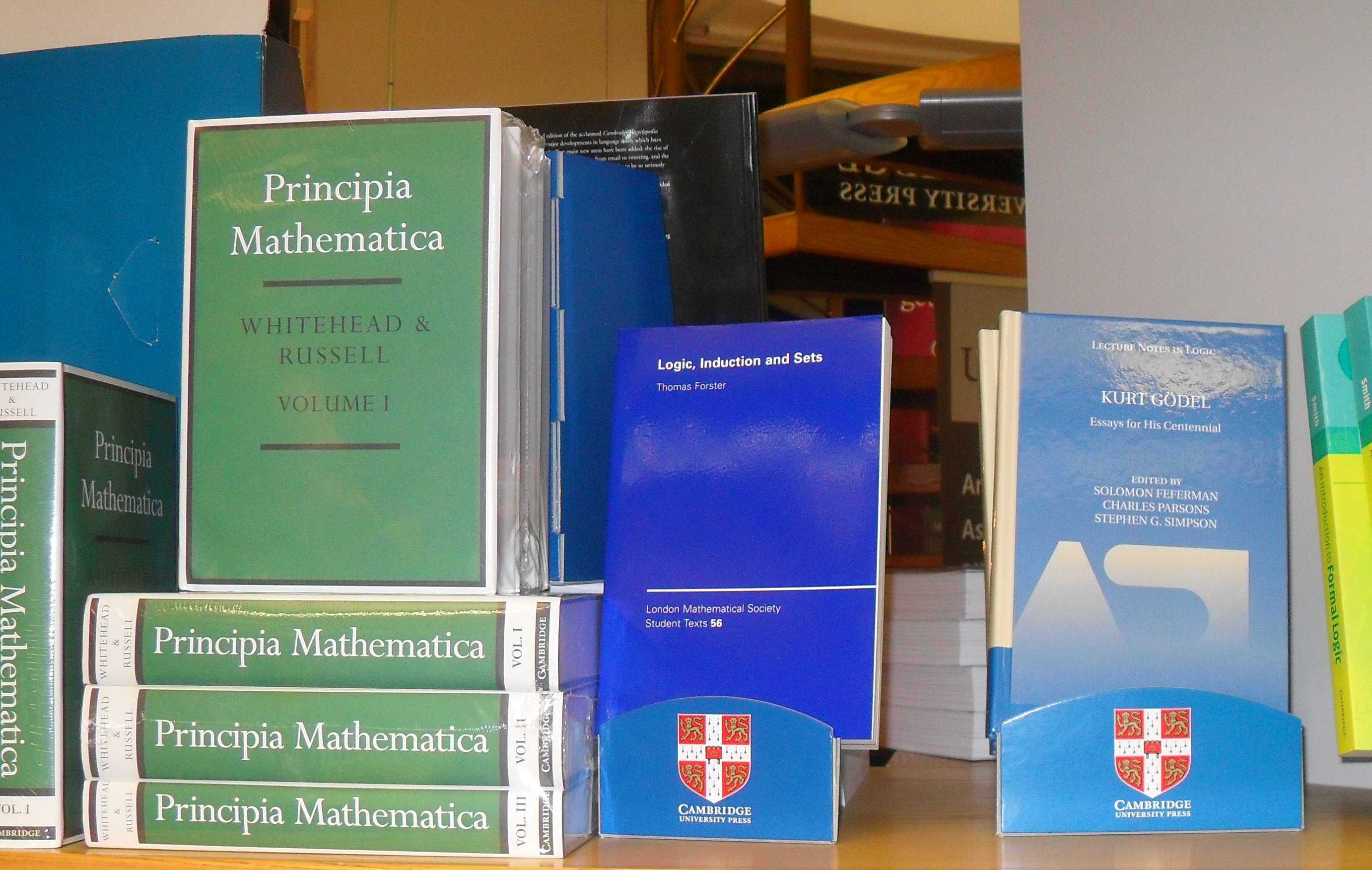
I keep unbelievably exalted company....
A fairly complete bibliography of my published writings can be found
here.
My lectures for the Part II logic course have now come out as Logic, Induction and Sets. A list of errata for this
book is to be found here.
Those works which the publishers
have allowed me to make available have links on this page.
My recent talk on the Axiom of Choice wot i gave at Young Researchers in Mathematics 2014
will probably go through a few more metamorphoses before i attempt to publish it, so i am not going to post the pdf here. If you want to see the current version feel free to email me and i will send you a heavily embargoed copy. I shall expect feedback! Already in print is The Axiom of Choice and inference to the Best Explanation which has recently appeared in Logique et Analyse. The Warwick talk is a much expanded version of this paper.
The Burali-Forti Paradox offers a potentially useful take on this widely misunderstood piece of logic. It has now appeared in The Reasoner.
There are three translations available:
My annotated translation of Coret's seminal article
Les cas stratifiées du schema de remplacement and
my annotated translation of Roland Hinnion's Ph.D. thesis are both
here .
Dualität is an annotated and illustrated translation of Specker's seminal
paper on duality in projective geometry, which I prepared in collaboration with Anne the widow of Harold Davenport. I prepared it for the
Garland Quinefest volumes, where it finds a natural place because of
the development of those ideas of duality into ideas of typical
ambiguity in Type theory and NF. I have removed from this copy a typo that mars the Garland version. Chad Brown reckons there is a mistake in the original. Click here for his analysis.
Permutation Models and Stratified Formulæ, a Preservation Theorem appeared in the ZML vol 36 (1990) pp 385–388.
Asenjo's system LP does not support modus ponens has
been much expanded by Jc Beall into a version which has been accepted by the NDJFL
and which includes a striking strengthening of my result by Jeremy Seligman. The
version posted here is essentially my original text.
A semantic characterisation of the
well-typed formulae of lambda calculus is from Theoretical
Computer Science.
Asynchronous games explores a way of representing asynchonous
games (Homicidal Chauffeur etc.) as alternating discrete (``clocked'')
games. I would be interested in feedback. It has now appeared in the
procedings of the Liverpool july 2004 meeting on knowledge and games,
but the version here will always be the more up-to-date one.
The
editors are allowing me to post here my introduction to the Buddhism in Logic and Analytical Philosophy
volume (``Pointing at the moon'') published by Oxford University
Press.
Relaxing Stratification is an answer to the top FAQ about NF: ``Can the stratification constraint be safely relaxed?''. Beginners might find this paper discouragingly thorough! It is a survey, joint work by me and Olivier Esser.
Paris-Harrington in an NF
context exhibits a formulation of Paris-Harrington and one of
Finite Ramsey that differ only in their quantifier prefix. It also
discusses the implications of the fact that—on the face of it—the
statement of the Paris-Harrington theorem is not stratified/welltyped
in the Russell-Quine sense. It has appeared in volume 17 of the
Cahiers du Centre de Logique. Subsequently I have been able to tidy up the situation and in Ramsey and Paris-Harrington Again [a note too short to be published] I exhibit a formulation of Paris-Harrington and one of finite Ramsey, both of which are stratified and which differ only in their quantifier prefix..
Rhetorical devices in Analytic Philosophy
is my contribution to the special number of Logique et
Analyse which contains the proceedings of the Logic and Rhetoric conference held in Cambridge on
the last weekend of October 2006.
My talk at the LMS
Sets-and-games meeting:
Games played on an
illfounded membership relation has now appeared in the Boffa 60th
birthday festschrift.
Finite-to-one maps has now appeared
in the JSL. It shows, without any use of AC, that if there is a
finite-to-one surjection from the power set of X to X then X is
genuinely finite (its cardinal is a natural number). I proved it years
ago and tho'rt nothing of it but Adrian Mathias and James Cummings
couldn't prove it when I challenged them so I tho'rt it might be worth
publishing and the JSL agreed, bless `em. Greg Kirmayer claims that
he can improve this result, and i'm inclined to believe him.
Yablo's paradox without self-reference
is in Logique et Analyse 185-8 (2004) pp 461-2;
Yablo's paradox and the
omitting types theorem for propositional logic is in
Logique et Analyse 54 No.215 (2011). The version linked here
(unlike the published version) contains a proof of the extended
omitting types theorem for propositional logic. I cannot find a
proof in the literature, and there should be one!
Deterministic and Nondeterministic Strategies
for Hintikka games in First-order and Branching-quantifier logic
is in Logique et Analyse vol 195 pp 265-69.
Implementing Mathematical objects in Set Theory
is in the special number of Logique et
Analyse devoted to Foundations of Set Theory, to wit vol 50 No.197 (2007).
AC fails in the natural analogues of V and L
that model the stratified fragment of ZF is a version (cleaned of
typos and minor infelicities) of the paper I gave at the Baltimore
joint meeting AMS/MAA in 2003. It is a work of breathtaking fertility:
read it and weep. Better still, read it and use the techniques in it to
prove Con(NF).
ZF +
Every set is the same size as a wellfounded set is in the March 2003 fascicule of the JSL;
BQOs and coinduction is in the dec. 2003 fascicule of Theoretical Computer Science;
The Modal Aether (wherein the egregious and vexatious errors of the possible world semanticists are expos'd, ridicul'd and confuted) is
in a collection called `Intentionality' edited by Reinhardt Kahle and
published by Springer. That was in .ps format;
here it is in pdf format but without the drawings.
Weak Set Theories related to HOL is an
improved version of my HUG 1994 paper from LNCS 859;
Why Set theory without the axiom of foundation? appeared in the Journal of Logic and Computation in 1994;
Sethood and Situations
(jointly written with Cathy Rood Wyss) has appeared in Computational Linguistics 22, (1996) pp 405-408.
Permutations and Wellfoundedness: the true
meaning of the Bizarre Arithmetic of Quine's NF is in the JSL
71 march 2006 pp 227-240.
Church's
Set Theory with a Universal Set is a revision and expansion of the
last chapter of my book on set theory with a universal set, and
supercedes it. It was written for the Alonzo Church festschrift.
It
is intended to be a comprehensive introduction to the method developed
by Church and Oswald to construct models of theories like Church's.
(The version here is to be preferred to the version in print, as I remove
typos and mathematical errors from it as they come to my notice.) A more
philosophical treatment of the same ideas is to be found in
The Iterative Conception of Set. Everyone who is anyone has written an
article under that title; what is distinctive about my contribution under
this title is that it was voted one of the ten best philosophy articles of
2008 by the Philosophers' Annual. Currently unpublished is
More on Church-Oswald Models, my latest
thinking on this amusing topic. Lots of nice stuff. My department has the matter constantly under review.
Sharvy's Lucy and Benjamin Puzzle is
included here with the permission of Springer, since I gave them the
copyright so it could appear in Studia Logica, 90 (2008) pp
249--256.
The organisers of the Riga conference on paradoxes have allowed me to
post here this brief Note on Paradoxes
in Ethics which will appear in their proceedings.
Erdős-Rado without Choice has appeared in the Journal of Symbolic Logic, vol 72, 2007, pp. 897-900. The version linked here
contains some informative comments by a referee which readers will
find very helpful; I am grateful to him/her for permission to include
them here.
Mathematical entities arising from equivalence relations, and their implementation in Quine's NF is my invited talk at the Munich workshop organised by Roy Cook and Erich Reck, and is to be found in Philosophia Mathematica 24 Issue: 1, Feb. 2016.
Alice buffs might like Who is the Red King?, soon to appear in The Carrollian.
Three extended reviews are here:
(i) My Computer
Journal review of Barwise and Moss's Vicious
Circles. Readers of that review—and others with an antiquarian
interest in the early literature on funny set theories—may want to
see my 1982 paper on
Strong
Extensionality;
(ii) my Studia Logica review of
Ziegler-Booth's edition of the collected set-theoretic writings of Paul Finsler, and
(iii) my Physis
review of From Dedekind to
Gödel.
My recent article on The Burali-Forti Paradox has come out in the Reasoner, september 2023.
The remaining material in this section is unpublished
Here are the notes for my contribution to the panel discussion organised by the Trinity Mathematical Society on 21/x/2013 with Imre Leader on Does mathematics need a philosophy? and
here are my notes for my talk to the TMS in october 2012.
Jamie Gabbay
recorded this talk
i gave at Heriot-Watt.
Here is a talk about
Synonymy, Stratification and the Universal Set" wot i gave on a trip to Vienna to visit
Hugo Wolf's grave.
It might not be the world's best talk, but the subject matter is important and I continue to work on it.
Leisure:
In my pathetically few hours of leisure I try to keep my knitting going, and strive to keep up my interest in
Astronomy and Politics
....and, of course, neurology (this .gif file is called Louise's Brain): [a wee exercise for the reader: join up the top-and-bottom, and join up the sides, and email me to tell me which surface Louise's brain is drawn on]
DPMMS front page.